the project
Holophony is an ongoing project in which I invite experimentalists to compose works for a custom and portable 64-channel Wave Field Synthesis array. These collaborations have resulted in installations or concerts in Los Angeles and Santa Fe.
This is a research based practice where I can offer up my accumulated technical skills I've gathered over the many years working as a sound technologists. While I still have a creative voice in the collaboration; this practice allows me to take a more passive role in the creation and serve as a conduit for ideas I might never arrive at. I have collaborated with composers from varying genres and influences and aim to continue this practice.
a few works
This practice has created 10 diverse works so far and with each work it increases our understanding and practice of working with Wave Field Synthesis. These works have included found sound, experimental electronic music, pop music, and other genres.
Presence of Absence
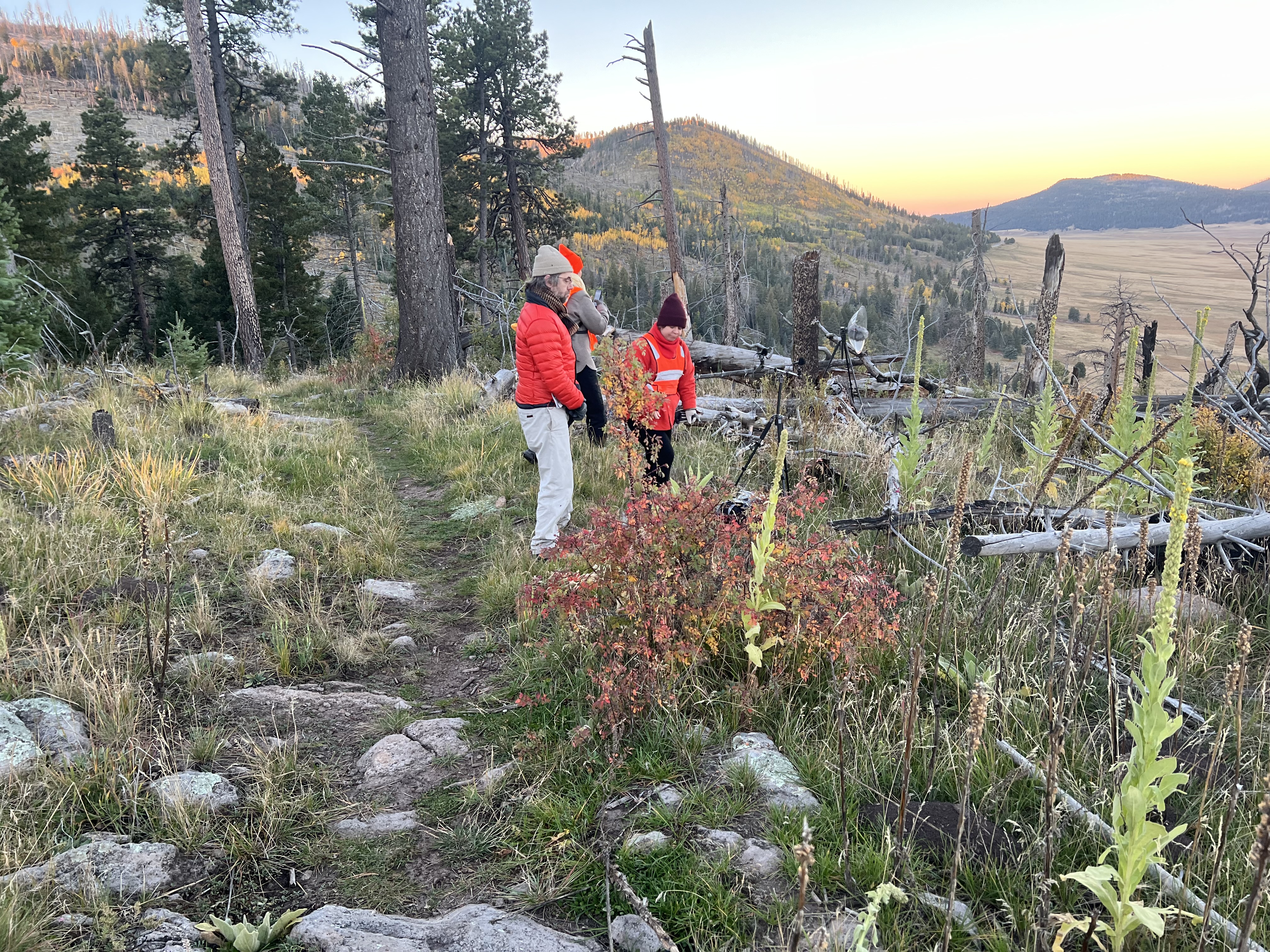
I worked with Adam Engle and Kara Gionfriddo on Presence of Absence, a piece that consists of elk bugling, a recording of an open air French market, distant saxophone tones, and other field recordings they've collected. The duo, who go by Palmerie, have a rich field recording practice and incorporated that practice into the work.
A binaural excerpt of the piece is provided; it merely gives an idea of the surrounding sound and isn't intended to replace the experience.
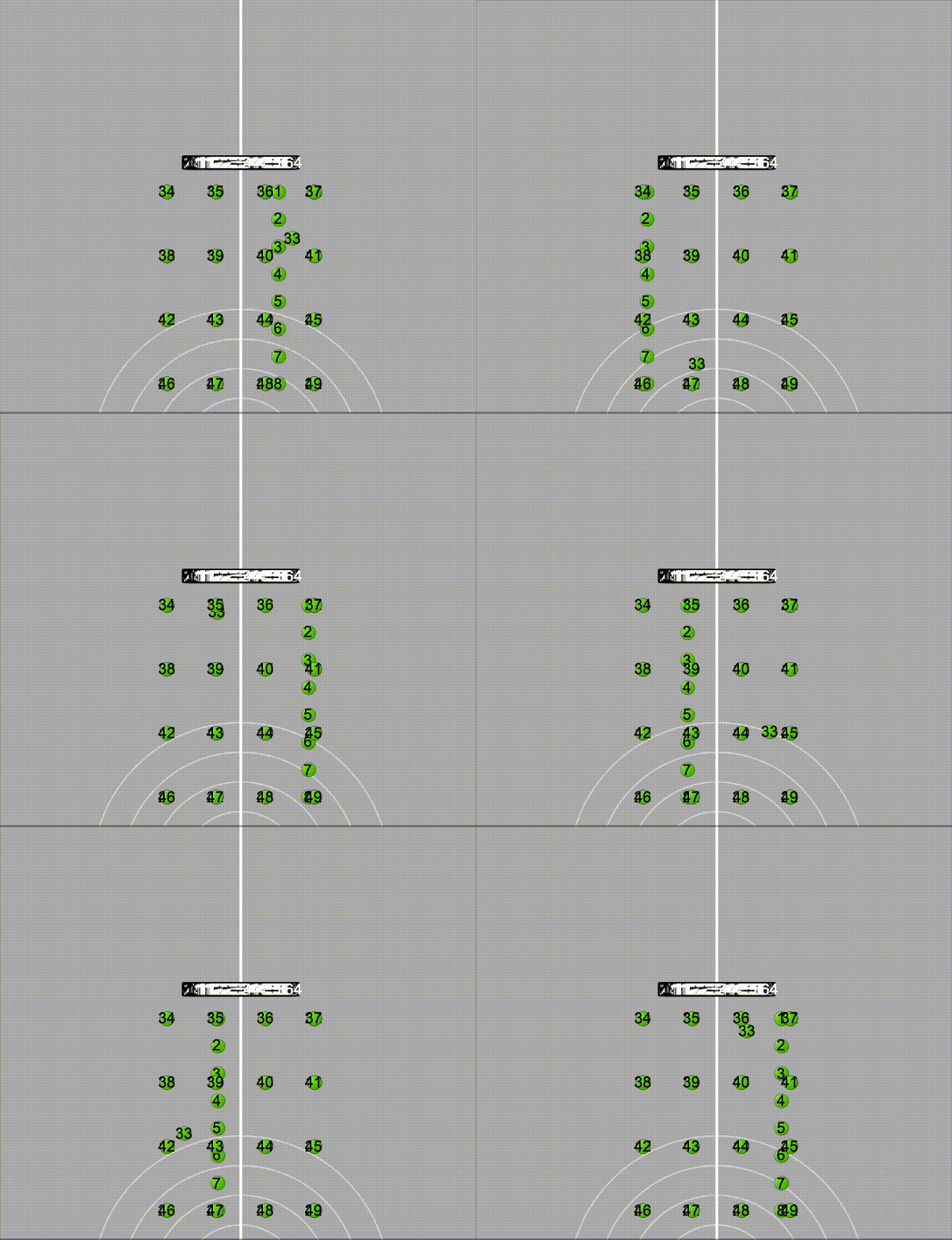
Throughout the pieces I've collaborated on it's always interesting finding out which type of choreography lands with a composer. In this piece Palmerie places the listener inside field of sound and simultaneously places a divergent sound far the audience. In this excerpt, the elk in the Valles Caldera surrounds the audience while a distant saxophone plays somewhere behind the array.
5.7a1c
Matt Hettich, who goes by Wake, created a swirling, chaotic, ear bending piece that worked really well on the array.
Matt and I have worked together at Meow Wolf for a long time and often talk about spatial music. What works, what doesn't work. We recognize the timbres that read as traveling through a space. Wake's piece, 5.7a1c, is filled with bit crushing and other distortion effects that amplifies the "in your head" effect of Wave Field Synthesis.
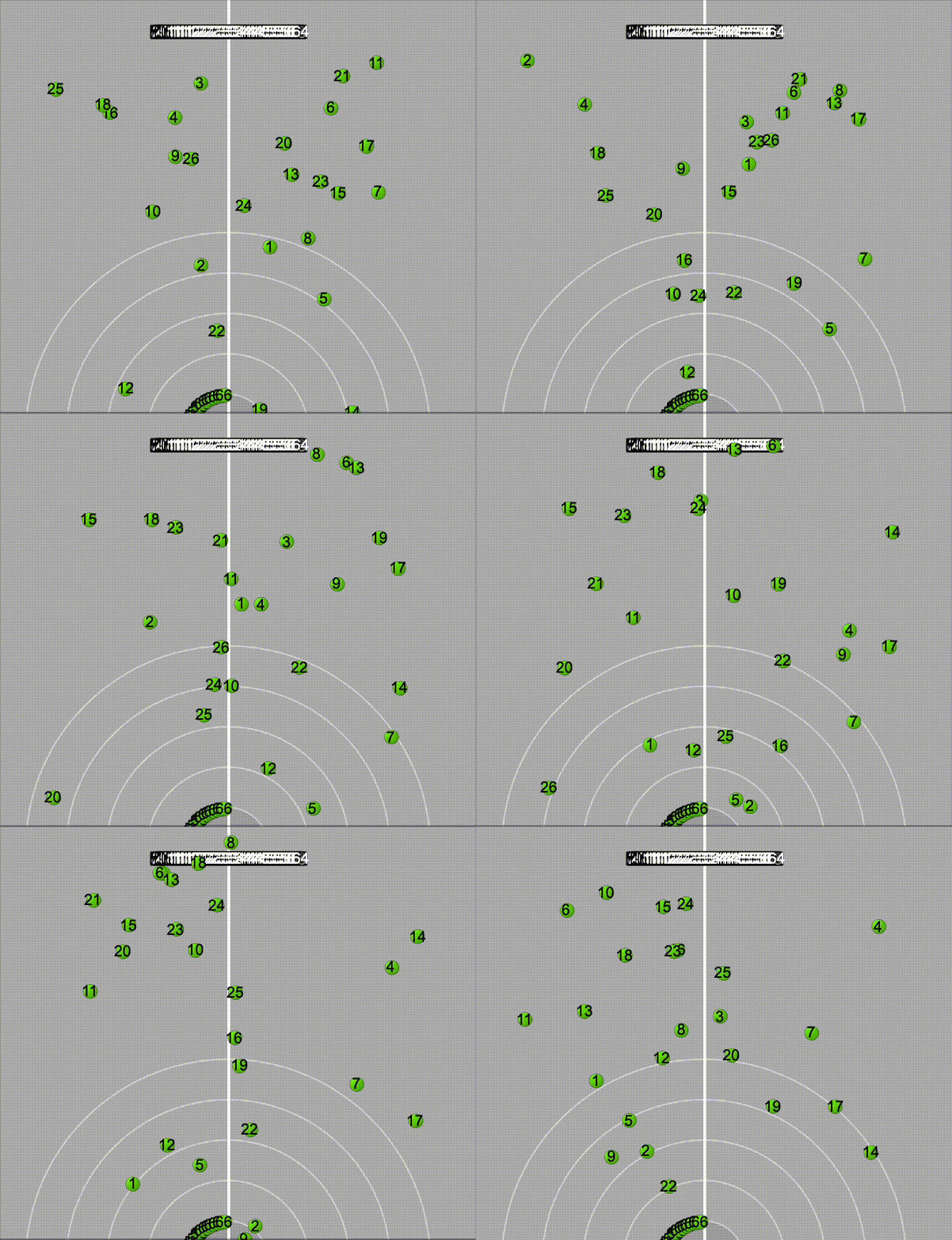
For the choreography we decided to a create random path for each channel that Wake was exporting through his tracker; 24 in total.
the array
I've been acquiring parts for this array over the years. My array design is based off of the EMPAC array array design at Rensselaer Polytechnic Institute.
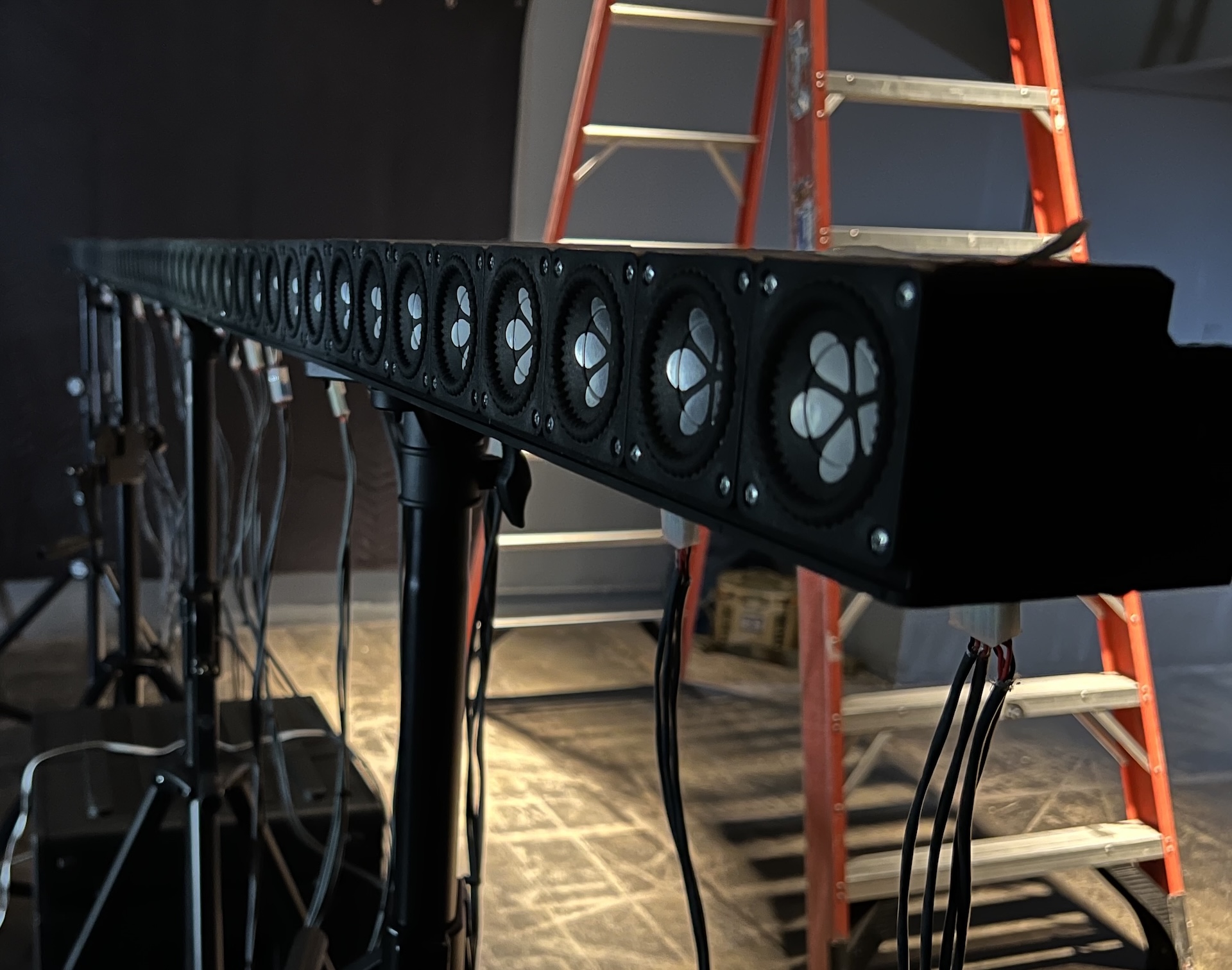
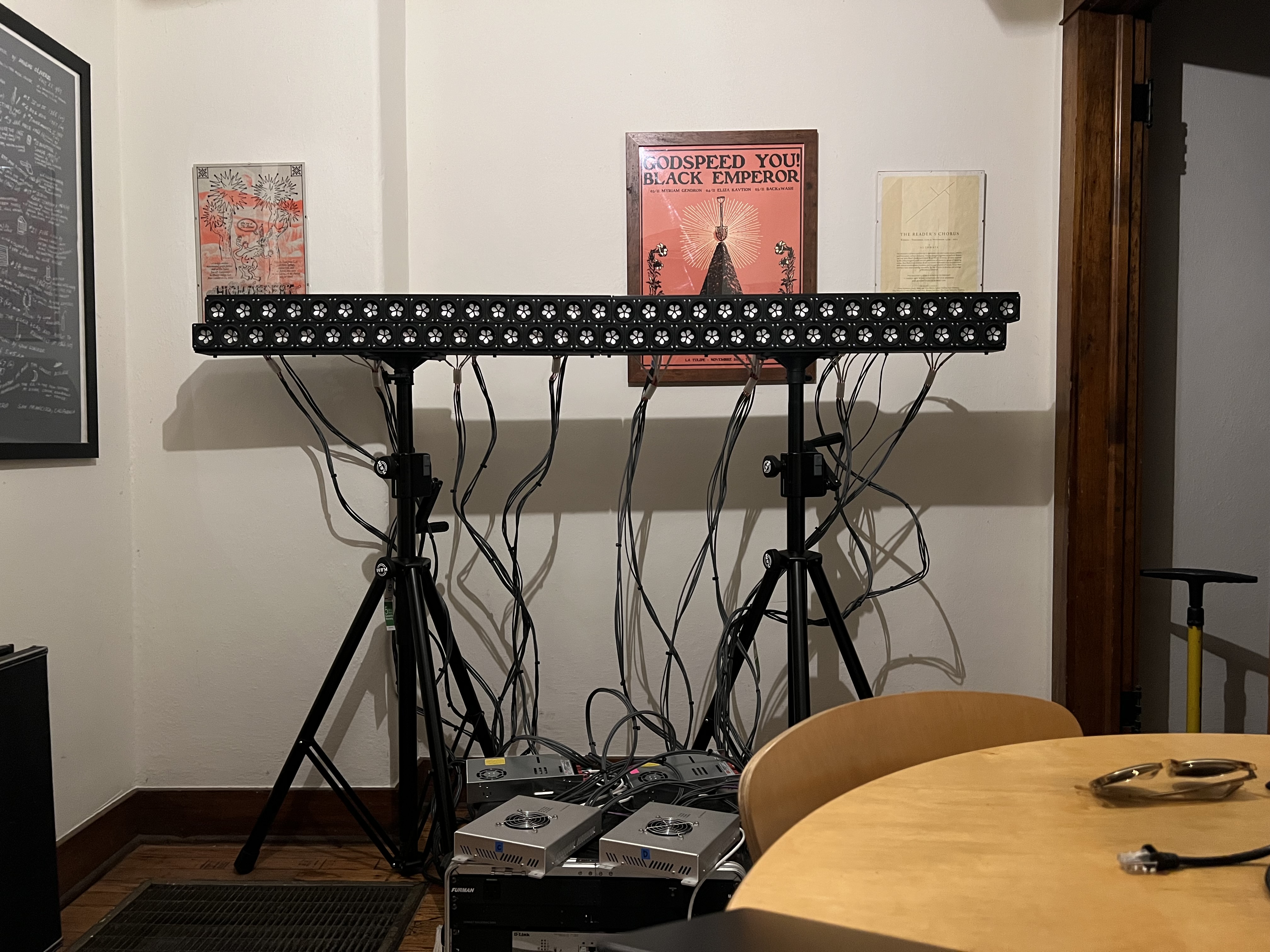
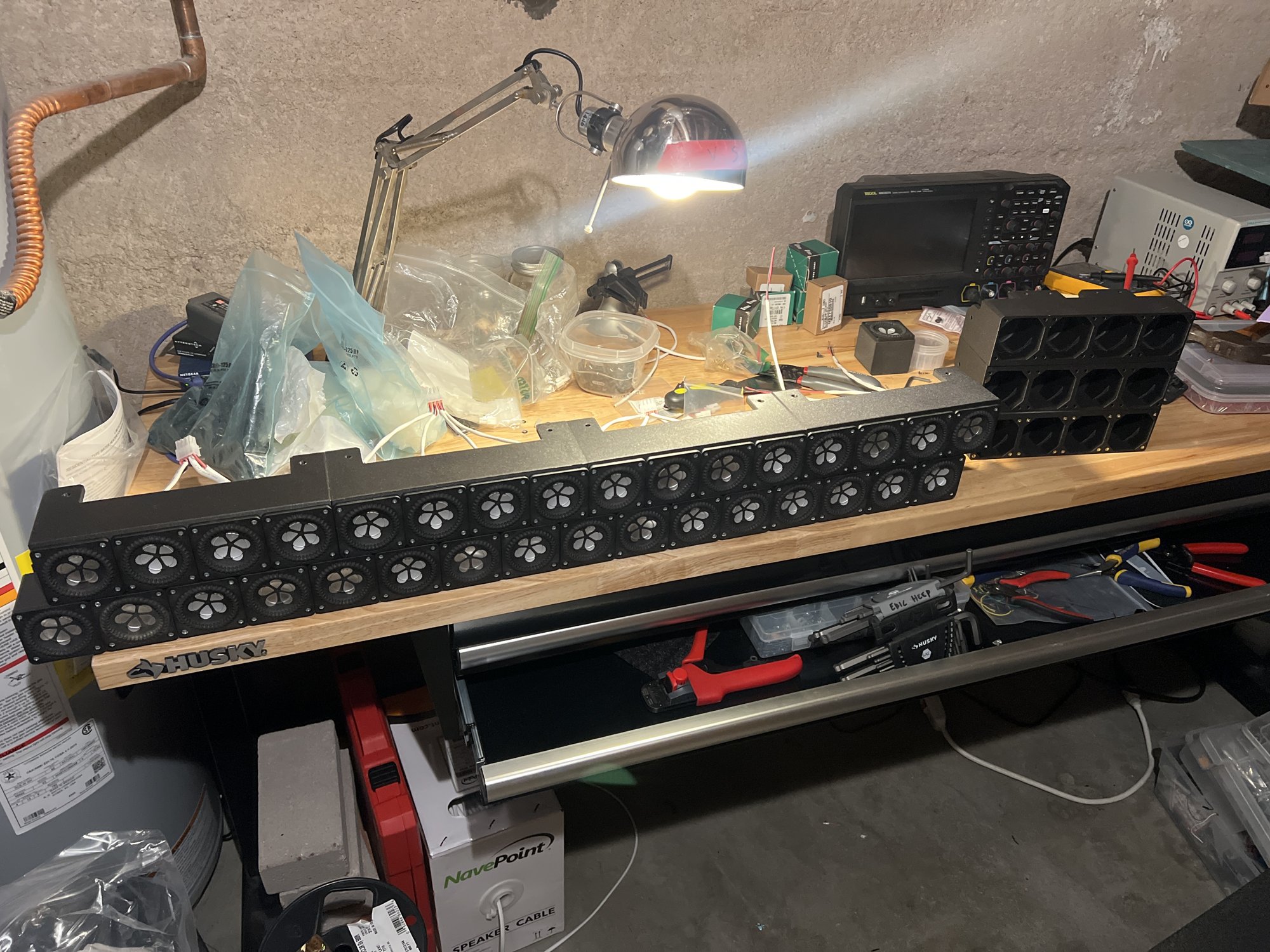
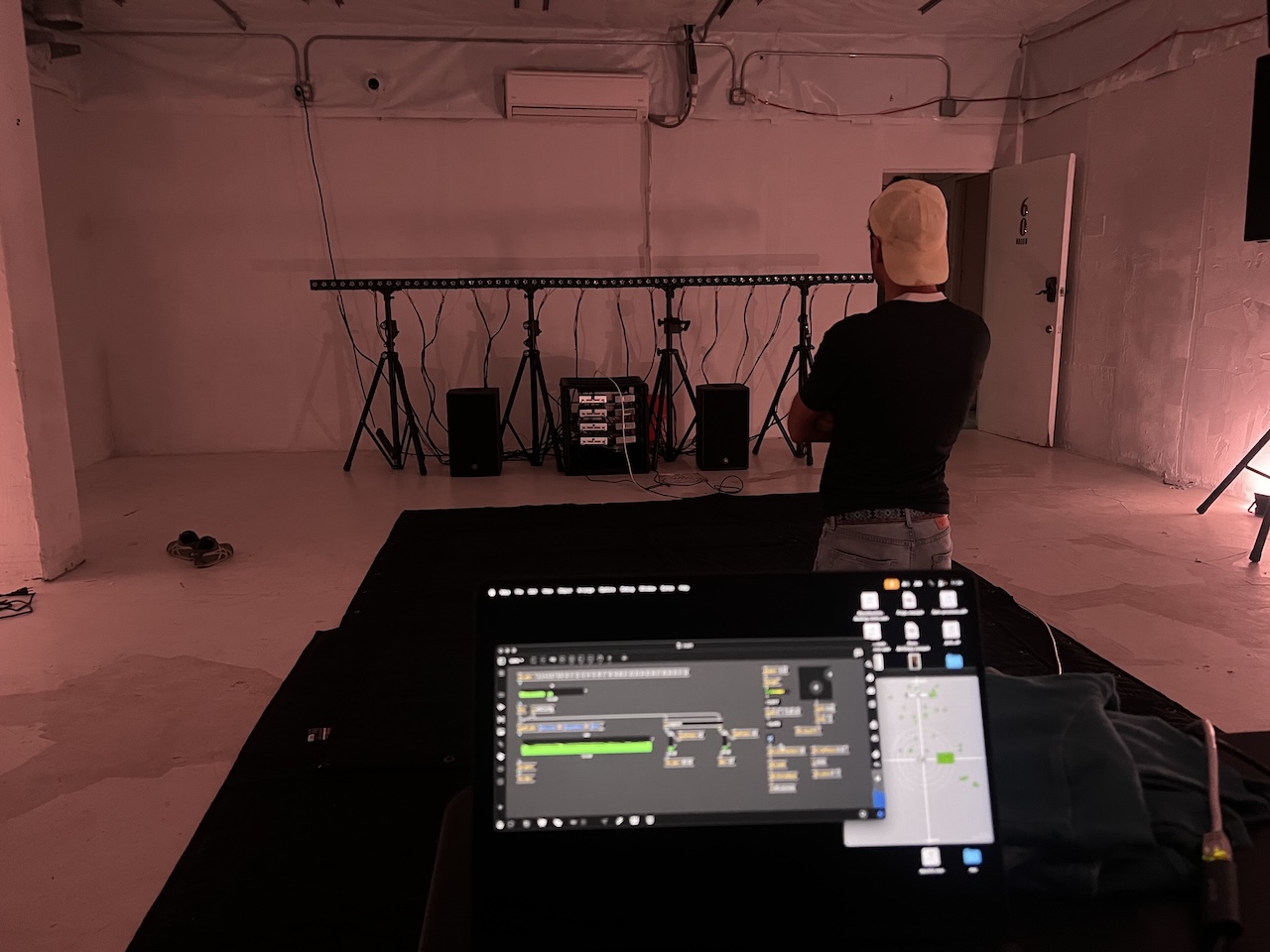
My design uses a 3D printed 4-speaker housing. The prints are designed to fit into each other to ensure that the spacing remains consistent across the array. They can be in either a single row configuration; which is 12' feet in length, or a double row configuration, which is 6' in length.
The components are configured in sets of 16 speakers which can be supported by a common speaker stand; this makes them portable. All of the speakers fit comfortably in a single pelican case.
One area where I diverged from most Wave Field Synthesis designs is that I house my amplifiers in a separate amp rack. Most designs house the amplifier, typically an Atterotech DTH1620, as part of the speaker enclosure. The trade off here is that my design requires far more cabling than other designs but remains air travel friendly.